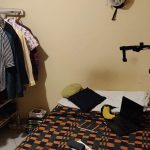
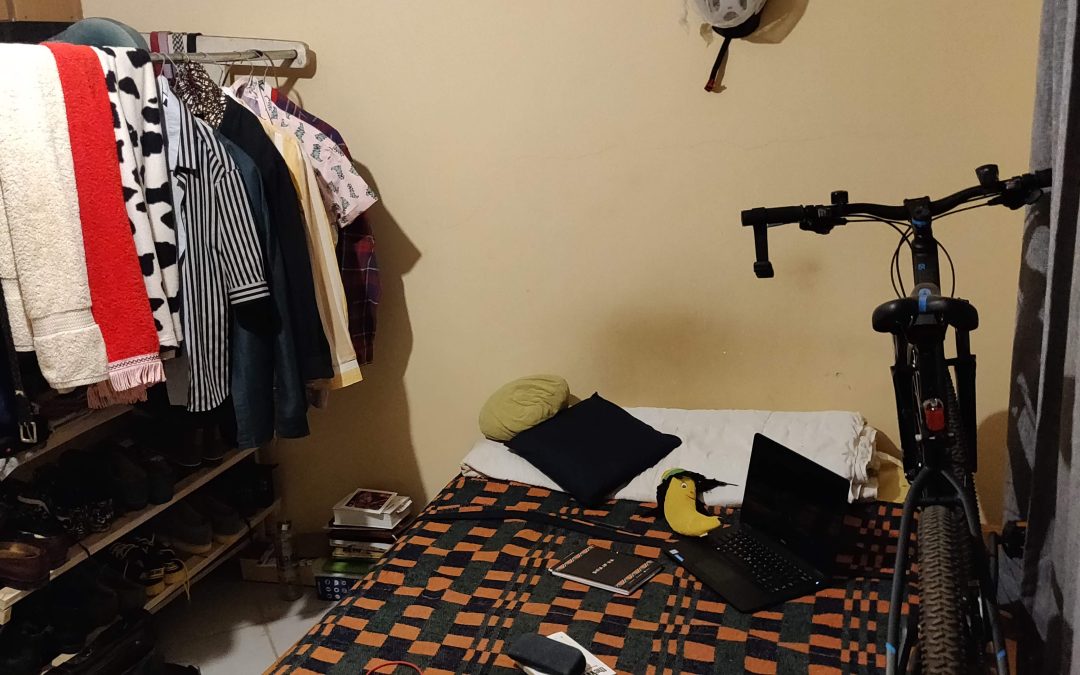
When I moved to Nairobi in 2018, my first house was a trapezoid-shaped bedsitter in Kawangware 46. Off Naivasha Rd, off Ngong Rd, as I put it. I lived on the fourth floor, betwixt two single mothers, one who had two children, and the other with a body that undid all that holy work the preacher yelled at church. That one, she fed me occasionally—food, not her body. My house was the smallest unit, could barely fit a gas cooker and a bed, and when I bought my first big boy purchase, a badass Samsung fridge, I felt I had arrived. The gods had singled me out for their favour.
This was on top of a KES 7,500 mattress, which was only 1,000 shillings less than what I was paying in rent. My amigo O— was the first to “launch” the mattress with his then girlfriend, because he still lived at home then. Later, when I would buy a pallet bed, he would break it with that same girlfriend. I never asked how. Didn’t matter; my house was his from Friday night through Sunday morning, which he would recompense with refilling my gas, or paying for electricity tokens. Mi casa es su casa, I told him. But, cheki, toa kakitu. What was a brother to do?
During the nights, I would shiver in the cold because the house had no access to sunlight. I like to think that, having been used to the cold, I now have antibodies against hypothermia and won’t suffer frostbite when I move to Russia or Canada or Mongolia. I also played a lot of reggae those days; somehow reggae music just lends itself to oppression and liberation, and there is no wall that can stop reggae. So what? My windows were small, and my cockroaches died out of starvation rather than cleanliness. My dreams of being a writer were not born there, but they had been christened. I dreamt that Binyavanga visited me, taken stock of my earthly possessions, and told me that I too would one day write about this place. I spent a lot of time by myself, thinking of the big money I would make. Mukuchu. Kichele. I would buy my mom a house. My dad a big car. The rest? This town would know my name. What’s money? It’s nothing. Watatii.
Our caretaker, King’ori, was between fifty and sixty-five, depending on what time of the day you asked him. He loved his job, or maybe he was just good at it. Having youth and ambition besides made me pity King’ori. He’d wasted his entire life. Such people were very dear to those of us who’d wasted only a few years. That was what made Kawangware 46 great. There was always someone in deeper shit than you.
I learned to be frugal in that house, a proper Philistine, surviving like a bean-counting accountant on the scraps of ambition. It was also a panopticon of sorts, a vantage point from which I could stare out the window and know who’s who, or who’s with who. It reminded me of the promises I made to girlfriends over the course of my dating life, of baby this and baby that, of how I’d marry them and hang the moon and the planets and star-jewels around their pretty necks; and, oh, how they’d put a hand to their mouths and stifle a giggle. All I had were words. And before long, I was out borrowing from tomorrow to finance the good life of today.