

TukTuks and bodabodas like a line of maniac safari ants. Wazees in kanzus and taqiyah, ladies in buibuis and younger ones in deras. Boys in football jerseys—Manchester United red; Chelsea, blue; Arsenal red and white. It’s a pastiche of red and blue, like police sirens in LAPD and NYPD movies, or the Police-and-Robber games we played with fake dushnyaos, back in the day. I am in Watamu, for the mahamri, Mzee Kobes, Italians na kadhalika.
I throw my eyes to the left, and a leso fighting for its life as it restrains a spiteful of nyash breaks into conversation: “Ukinichoka mdomoni niweke magezetini.” Another replies, “Miniskirt bila tako ni bandage.” Sisemi kitu. Langu jicho tu.
Outside, someone adds more charcoal to the sun. It takes off its jacket of clouds, digging hot elbows into the beaches. 32-degrees Celsius. I am wet in places I dare not describe. I am down to a vest and hoochie daddy shorts, sweating my balls off, if balls could be sweat off.
For security purposes, I can’t divulge that I am hovelling at Hemingway’s Watamu, or that, stirred by local atavism, I have resorted to speaking like a mosquito is lodged in my nose…Dogo, mahamri shi’ngapi?
All across town, white men walk with the stereotypical African woman—lithe, lecherous, skinny, and preferably baldish. Langu jicho tu. Sisemi kitu. The kind of woman who would likely be cast as Karen von Blixen’s octoroon slave in an Out of Africa biopic, which means the kind your mother told you not to bring home, with hollow clavicles and sharp ankles. She—your mother, mama mzazi—raised you as an African man who likes meat on his plate, so wouldn’t it only be natural if you liked meat on your woman too?
The beaches in Watamu are unlike the ones in Mombasa. Beaches so white it feels wrong to step on them. This is where rich men come to relax after a long month of oppressing the masses. There’s no one here trying to sell you madafu, no one trying to take you to the middle of the ocean and “have romantic lunch on a dhow” then smiles, strangely; no one asking you if you are a beach boy because you have dreadlocks. Let’s just say my Mama Mzazi has never been here and neither has yours.
In the evening I am invited to a Dhow Cruise. I go. Why not? It’s a free country. Plus, it’s my private time, which I waste with the profligacy of a callow bachelor. I am doing nothing, and I am doing it well. Male privilege, baby. I make friends with the bartender on board and he tells me things which I write down: who his father is (a big shot in Kenya); how old he is—not the father, the bartender—(born 1991), how he earns more than his boss (over 200K), the grade he got in high school (B+). I confirm all this to be true. Don’t ask me how, just trust me. He tells me things he probably shouldn’t tell me, things I could, but won’t, tell you. He tells me he has five wives. Officially? I ask. No, he says. Those are just the ones who are known.
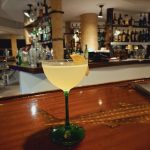
The lackey, called Sunday, interrupts us offering a smattering of shrimps, pweza, prawns, na kadhalika. I eat all of them. In my culture, rejecting food is the equivalent of spitting on someone’s grave. The captain of the ship, officially called a Coxswain, and who’s been doing this for 25 years, asks how we are doing. I tell him the Gin & Tonic is in me and I am in the Gin & Tonic. I ask him who is the most high profile guest he’s ever had. The King of Sweden, he says. Sweden has a king? “Yes, very famous.” He’s not that famous if I have never heard of him. Which is like saying the Democratic Republic of Congo isn’t, erm, democratic.
I have eaten so much seafood I have learned how to swim. Maybe it’s the Gin & Tonic, but I can’t stop thinking about the word “Coxswain”. Something about how it rolls off the tongue. Like hot slime. Like King of Sweden. Who knew Sweden had a king?



Nice one👊🏿champ