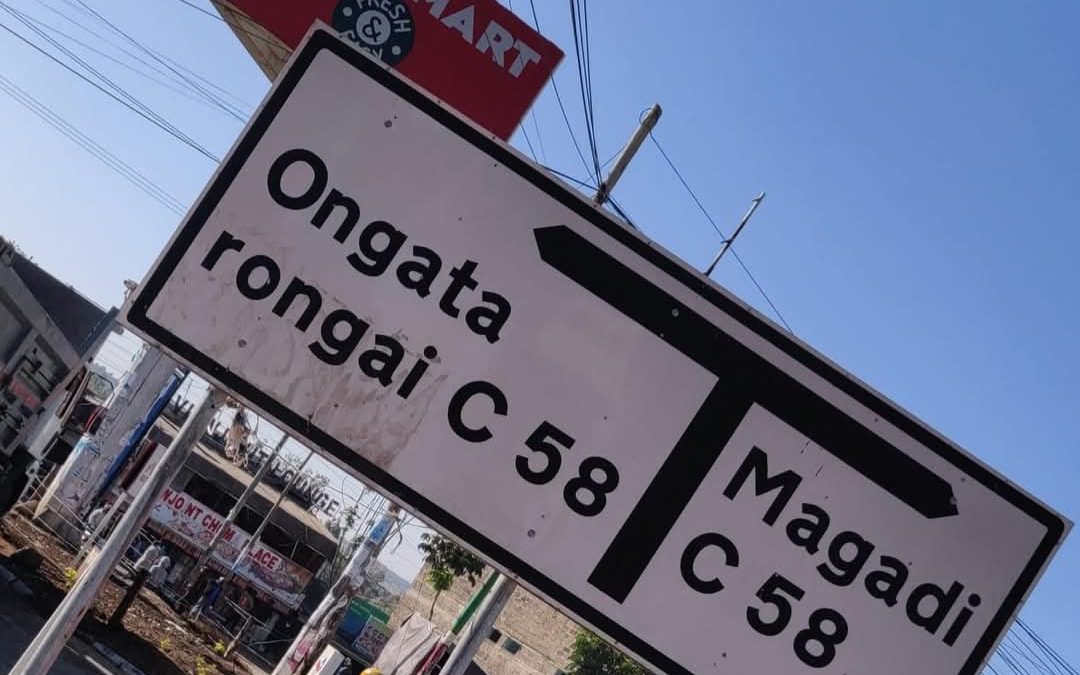
To get to Ongata Rongai, you board those decrepit buses at Railways. The route is 125. Fare could be anything between 50 bob and 120 bob, depending on the mood of the conductor, the rain or the number of traffic officers on the road. If you are in a different tax bracket—in which case mnatoa wapi pesa?—you can hop, skip and jump to the Naivas, which may or may not save you money, on Moi Avenue, just before you join Haile Selassie Ave, the one opposite Memorial Park, over lorded by that towering Cooperative Bank House, where I deposit my minimum wage for the government to do as it wishes with it. Here you will find nganyas, the ones that require your consent because this is suicide watch and you are mad but that’s okay because Kenya is an asylum. Anyway, nganyas charge a king’s ransom for fare, just because. The law to them is a suggestion which is why the president’s son has invested in them. The nganyas here have names: Catalyst, Shakur, Mad Max, Moneyfest. Inside, it’s a latter-day Roman Colosseum—neon lights, thousands of screens, the sun setting in the rear window, and a crowd baying for blood and honour. The makanga, donda, manamba is a Roman Senator and he does not negotiate fare. He takes what belongs to Caesar, sometimes also what doesn’t belong to Caesar, which is probably why the president’s son has invested in them. You are advised to carry exact cash because change starts with you. And ends there too.
I always thought I’d meet the love of my life in a matatu because I already have my epitaph written: “What a ride, eh?” As you can tell from the fact that I am still writing this I am not dead. As for marriage, I live in Nairobi. My situationship with matatus was borne of Necessary Noize’s Kenyan Boy, Kenyan Girl—dere wa mathree, conda wa mathree na pia ka wewe unapanda mathree. Eargasms, I tell you. The journey to Rongai is a long arduous one, you can spark a conversation with a mean Maasai girl who has kienyeji vibes but si mshamba, ask her what she does for a living, where does she stay, patati patata, and has she ever dated a Rastafarian who smells nice and doesn’t smoke weed—on purpose? Perhaps it’s too early in the day for our sisters of negotiable affections to be giving me unwanted attention. But don’t mind my carnal desires. Let me tell you kidogo about Rongai.
Rongai in Maasai means narrow, and the Maasai may not be known for their honesty, but they are not known for their lies. So they do mean narrow. The roads are narrow. The development, narrow. My patience, narrow. I look around. I’m exasperated. It feels like fucking Enugu or Ouagadougou or some shit.
Ubiquitous like Kayole and Makutano—every major town seems to have a Kayole and Makutano—is Rongai. One in Nakuru. Another in Tanzania, a particularly virulent stretch to climb the Kilimanjaro. And Ongata Rongai. This one here started as a trading centre for Maasai cattle. Soko Mjinga. Those who know things tell me of the origin of the name “Soko Mjinga”. That if you don’t know the local market price of any commodity, you’ll be given the ‘Nairobi’ price, and ergo—who might be the ‘fool’—mjinga sokoni? Others say it’s because of the incredibly foolish market prices—soko as a mjinga. There are many Soko Mjingas around the country. Just as there are many more fools across the country.
I don’t understand the concept of Rongai as a town. First, we don’t drive on the left, we drive on what’s left. Animals have right of way here, be it goats, lions or hyenas—both the ones on four hinds and their two-legged counterparts, if you know what I mean. Gangs of street dogs with tongues hanging, hyperventilating, hungry. Motorbikes. Hawkers shouting out of turn in a surprisingly rhythmic verbal molotov. Customers haggling, hondling, haranguing. It is relentless. The air is an acrid haze—dust, smoke and the smell of an economy burning. I haven’t seen a single Chinese person or banner or something and that’s how I know this place is damned. I don’t know what Rongai is known for. I don’t know if anyone knows. I don’t know if anyone cares. Rongai is a wild country. It is what backpacking tourists and Lonely Planet and Western media mean when they say they have been to Africa. Well, western media also add the naked kid with a loin cloth, and protruding stomach, and a fly for dramatic effect. But for marketing purposes, Rongai is good old Africa. Unfortunately you’ll have to take my word for this, but I even heard the petrol station attendant answering to the name Livingstone.
Where was I? Oh yes. We are (still!) in Rongai. There is a man peeing at an electric fence, but I am the one who is shocked. I look away and nod to Kenya Power being Kenya’s power or lack thereof. There are rumours that lions are on the prowl but everyone knows lions don’t eat black men. Our skin is too taut, too tough, and besides the electric fences are supposed to work. Supposed. Besides, why would lions hunt in Rongai when they can just skip to the other side of Langata? Much more cholesterol. Also, we would have seen it on NatGeo Wild or Sir David Attenborough would have told us on BBC Planet Earth or something. Right? We haven’t. So, they don’t.
I have been here for, let me check, 37 minutes, and I have moved like, let me check again, a metre. Something major or stupid must have happened. I know this because I don’t ask questions I don’t want answers too. Watching the traffic officer flail his arms in the horizon feels like what the people of Hiroshima probably experienced when they looked up in the sky on one random morning in 1945. I feel like Karen Blixen and want to just get out of Africa.
A signboard heaves and huffs under the weight of its name. Ongata Rongai. A national miscarriage of dreams. This is a gladiatorial arena for cows and goats and sheep, which is why I am here. Why am I here? Soko Mjinga. But really, mjinga sokoni.